

Eurozone a 'slow-motion train wreck' – senior economist
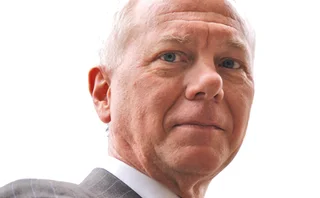
Larry Brainard, chief economist at political risk consultancy Trusted Sources, argues that until Eurozone policymakers shift the emphasis of remedial action from sovereign debt and onto the banking sector, the region will continue to struggle.

The 30-year career of Larry Brainard, co-founder of Trusted Sources, a political risk consultancy focused on emerging markets, includes stints as global head of emerging market research at Chase Manhattan and co-head of emerging debt markets at Goldman Sachs. While the Brics have shown resilience so far – an achievement that might have been unthinkable during past global downturns – the big question now, says Brainard, is whether they would be able to sustain high levels of growth if the US and Europe’s economies perform sluggishly or, worse, contract for an extended period.
It is not yet clear, for example, whether the external demand for goods from the major advanced economies that makes so many emerging market countries tick is returning. Indeed, Europe’s crisis is still playing itself out.
“I wrote a piece saying Greece would have to restructure its debt but then we had this huge half-trillion euros bailout fund, so what started as a sovereign debt crisis has turned into a banking crisis,” says Brainard. “Lenders to these countries have sovereign exposure in their portfolios. Because the sovereigns are going to get bailed out, banks don’t have any incentive to sell this exposure at a loss. They can just hang onto it and let it run off when it matures.”
Brainard argues Europe’s greatest problem is not with the indebted sovereigns, but its banks.
“The basic focus of policy has been to bail out the sovereigns but they haven’t really understood the nature of the banking market. Banks are going to contract credit because they don’t want to have the same level of exposure: they want to reduce their exposure and that means the private sector’s going to get squeezed,” he says.
Brainard is worried about the moral precedent set by the bailout too. Instead of freeing up labour mobility within the currency bloc in order to spur growth, Europe is allowing its most indebted countries to depend on handouts from stronger governments. But much ink has been spilt on the subject of the need for faster fiscal transfers to stricken areas across the currency union. Isn’t that the most pressing problem?
“If you have mobility of labour and capital, that will solve itself,” he says. “If it is private sector-driven, I don’t see a problem. You should not rely on government handouts. If poorer provinces do not have a bailout mechanism that could actually be a good thing, because then they basically have to fall back on the market.”
Pariah status
Meanwhile, Brainard sees money markets continuing to pull back from Europe and perhaps major US banks readjusting their regional allocations.
“US banks are not going to cut their lines to Deutsche Bank but there are lots of other German banks where they will just cut back. Will US and European markets still be decoupled in six months? Definitely. Even if you are talking about four or five years, it is not out of the question.”
Brainard reserves special disdain for Eurozone politicians, who he maintains are failing to address the problems in their own backyard. “At the moment you have a lot of brave talk by European politicians saying the markets are irrational because they are not funding European banks, but the market view is that these institutions are risky. So all the countries have austerity programmes, programmes that will worsen the risk profiles of these banks. Why should anyone want to buy their debt? It highlights the irrationality of the European banking system.”
Brainard argues the reforms Europe needs are structural, requiring measures few policymakers are prepared to take.
“When you look at the Eurozone you see politicians running around pretending they do not have any problems. You have Dominique Strauss-Kahn [managing director of the International Monetary Fund] telling us everything will come out okay. The IMF thinks these countries are great, but it said that back in the Asian debt crisis in 1997 and that turned out to be a disaster,” says Brainard.
“Policymakers have lost credibility: look at the Eurozone and ask which policymakers have any credibility. Not those in Germany, nor in Spain, nor in Greece. You can run a bank without any capital so long as the government stands behind it, but external lenders are going to look at that and want to get out. In my view it’s a slow-motion train wreck,” he adds.
The difference between the US and Europe in dealing with bank losses has been instructive. Where the US acted swiftly and resolutely, carrying out stress tests at an early stage, the results of an EU-wide stress-testing exercise were only published on July 23. The tests were widely criticised for failing to incorporate more realistic price declines for sovereign debts, as well as for focusing on credit-loss estimates without taking into account variations in risk according to country or region. A UBS report published in July said the tests should have focused on wholesale funding and the structure of banks’ balance sheets. If the stress tests have failed to address the real problems, that could spell trouble for Europe’s banking sector.
Brainard says: “The European banking sector has not been cleaned up. Take the German Landesbanks and the Spanish cajas. What they’re trying to do is merge the weak ones with the strong ones. We don’t know whether that’s going to work or not, but the process is not transparent. They need a programme to restructure their banks. It is mostly a national issue not a Eurozone issue, but they need more money. That is why I think this bailout fund, which was designed for sovereign debt, will be used to bail out the banks.”
Cracks in China
Reverberations from Europe’s recent identity crisis have been felt far and wide. Few places feel it more keenly than China, which looks to the European Union as its principal export market.
“The declining euro is going to hit Chinese exports for sure. That is why we’re going to see China loosening its monetary policy later this year. They are squeezing their economy right now. GDP growth is coming down and they’ll try to keep it at 7% or 8%,” says Brainard.
China may have bigger fish to fry at the moment, not least the problem of where its wealthy citizens can put their growing hoards of cash, given restrictions on outflows and underdeveloped domestic financial markets. One of the results of that mismatch between the supply of domestic money and its possible investment destinations has been the real estate bubble.
“The Chinese authorities are trying to solve the problem by torpedoing the real estate sector, but the money will just come up somewhere else. They have issued all these edicts against speculation and mortgages for second and third apartments. It is a big deal and we think it will affect confidence and probably push prices down somewhat, but ultimately there is no place for the money to go. It just sits in the bank.”
The typical rate of interest for bank deposits, however, is less than 2% in an economy that has roared along at an annual 10% growth rate for the past decade. Nor does that rate show any signs of slowing: in the first quarter China’s economy was 11.9% larger than it was in the same period in 2009, against an overall 2009 rate of 9.1%, according to figures from China’s National Bureau of Statistics. Much of that has come from the government’s economic stimulus programme. According to Stephen Roach, chairman of Morgan Stanley Asia, 70% of China’s 2009 GDP growth came from the stimulus package alone.
China does at least have other options to get money circulating more naturally again. Brainard says: “Some of the provinces were given permission to issue bonds and that’s the closest thing you have in China to sovereign debt. It’s an alternative to bank lending. They’re squeezing bank lending but, by letting some provinces issue, they can ease up the monetary squeeze.”
Not, he adds, that this move provides opportunities to curious foreign investors. “There’s nothing foreign investors can do in China. If you want to bet on the appreciation [of the renminbi] you have to go into the non-deliverable forwards market. People played around in that market but they didn’t make much money.”
China’s currency appreciation is the perennial focus of economists, investors and politicians alike; concerned that a cheap yuan has bolstered global imbalances by favouring Chinese exports. More recently, however, many have turned their attention to labour wage inflation in China. Could this undermine the China growth story?
“I don’t think inflation is an issue in China generally. Inflation is a problem in terms of food prices because there is pressure on supplies. Demand is growing rapidly, whereas production is lagging, so they have to import.”
According to Brainard, China’s inflationary environment is mixed. Food prices are rising at 7% while the consumer price index is at 3.1%. Meanwhile, he says, manufactured, durable consumer items are experiencing deflation of around -2.5%; commodity prices have been sliding too. Food aside, Brainard’s outlook has deflation as a far higher risk than inflation.
“I am a deflationist. Look at China: there was a lot of investment in all of the key exporting industries. There’s been some export recovery but you have not really used up all the excess capacity, which is reflected in the deflation of domestic prices.”
Bet on Brazil
Finding a way to tap into the China growth story may be an obsession for some investors, but it is Brazil that Brainard is most bullish on.
“There is still money going into Brazilian bonds and a lot of the money’s coming from Japan. It is a Mrs Watanabe trade,” he says, in reference to the typical Japanese female retail investor. “Mutual funds are investing in high yield foreign assets like the Brazilian real. Nomura, for example, would put together a fund and then retail investors buy shares in the fund. They are indirectly linked to buying the bonds.”
But, with Brazil’s central bank tightening monetary policy, it is costly for corporates to issue. “The overnight rate is 10.25%, probably heading up to 13%. Inflation is about 5%. So you have a very high real rate of interest, about 6% to 8%. The currency has been pretty much stable too although I’m not sure that’s going to last.”
Brazil’s central bank, says Brainard, has de facto independence and a good track record of inflation-targeting, so enjoys credibility in the market. However, its abilities could be tested by inflation in the coming months.
“Inflation is the big risk in Brazil. It could go through not just the top band of 6%, but up to 7% because the labour market is very tight. Labour supply is pushing up prices so you have the potential of cost-push inflation.”
Nevertheless, Brainard believes that even with inflation factored in, Brazilian yields are attractive. You might, by investing in 1.5-year or two-year paper, be making a nominal return of 13% and a real return of around 8%. No wonder Japanese housewives are muscling in.
“Brazil is issuing everything. On a fixed rate instrument you can get quite attractive returns. What could go wrong of course is high inflation. But I recently came back from Brazil with the impression that most fixed income investors are just happy to hang out and see what happens.”
According to Brainard, fears about Europe have not yet gripped Brazil. “There is concern but Europe is far away. The biggest concern is China through the commodity linkage; as a buyer of soy, corn, iron ore and pulp, which is now growing as a major export commodity. I was surprised by the Brazil-China linkages and how everyone is focusing particularly on that, usually through the commodities link. That is new because it used to be that the local market traded by the New York Stock Exchange, but now people talk as if China is the big driving factor in the market.”
That suggests a shift is taking place in both countries, with Brazil looking to China as a primary trading partner, while China’s focus is more inward.
“It is linked back to domestic Chinese demand. That is new. Prior to 2008, China was generating a 2% to 2.5% contribution to GDP growth from exports. Now it is very small, probably small positives, less than half a percentage point. The difference is that what is supporting Chinese growth now is primarily domestic infrastructure spending and the property sector. This has been especially intensive with property, which usually means steel. Then there is consumer demand for food, which means soy, corn and some chicken exports. So that strong consumer demand continues in China.”
Is China finally assuming a new role in the global economy, one in which its status no longer rests uniquely on demand from the US and Europe?
“That is the question we are debating, whether there will be effective decoupling as Europe goes into longer-term stagnation because of its crisis. The US is not at that point yet but many people are arguing that it will have trouble maintaining a 3.5% growth rate. It could slow to 2% or 2.5% because consumers are retrenching and businesses are sitting on cash. In that scenario the US has positive growth but housing is still very weak. You do not get a bounce-back of investment. So I’m more pessimistic on US growth. The consumer will continue to retrench,” says Brainard.
Only users who have a paid subscription or are part of a corporate subscription are able to print or copy content.
To access these options, along with all other subscription benefits, please contact info@risk.net or view our subscription options here: http://subscriptions.risk.net/subscribe
You are currently unable to print this content. Please contact info@risk.net to find out more.
You are currently unable to copy this content. Please contact info@risk.net to find out more.
Copyright Infopro Digital Limited. All rights reserved.
As outlined in our terms and conditions, https://www.infopro-digital.com/terms-and-conditions/subscriptions/ (point 2.4), printing is limited to a single copy.
If you would like to purchase additional rights please email info@risk.net
Copyright Infopro Digital Limited. All rights reserved.
You may share this content using our article tools. As outlined in our terms and conditions, https://www.infopro-digital.com/terms-and-conditions/subscriptions/ (clause 2.4), an Authorised User may only make one copy of the materials for their own personal use. You must also comply with the restrictions in clause 2.5.
If you would like to purchase additional rights please email info@risk.net
More on Economics
Global investment outlook: 2026 and beyond
Broadening, steepening and weakening: Franklin Templeton’s top investment ideas for 2026 and beyond

Webinar – Nowcasting the US economy
Join CME Group Chief Economist, Blu Putnam, as he shares insights using alternative data and nowcasting to monitor developments in the US economy.


Fed Funds Futures in a Post-ZIRP World
As the FOMC returns to more active management of its key target rate, Federal Funds futures have experienced dramatic growth.


Challenging economic pessimism: an optimistic note
A contrarian, upbeat view of the long-term economic outlook
Economists, like hedge fund traders, need open minds
Economists, risk managers and traders must learn the lessons of crisis, says Kaminski

Fed wrong not to start QE tapering, says UBS economist
The surprise decision by the Federal Reserve last month not to scale back its quantitative easing programme will create more volatility, says economist
