

Economists fear 'global bond trap'
Economists warn fiscal belt-tightening in Europe may exacerbate imbalances in the global economy, leading to sluggish growth and excess liquidity in government bonds.
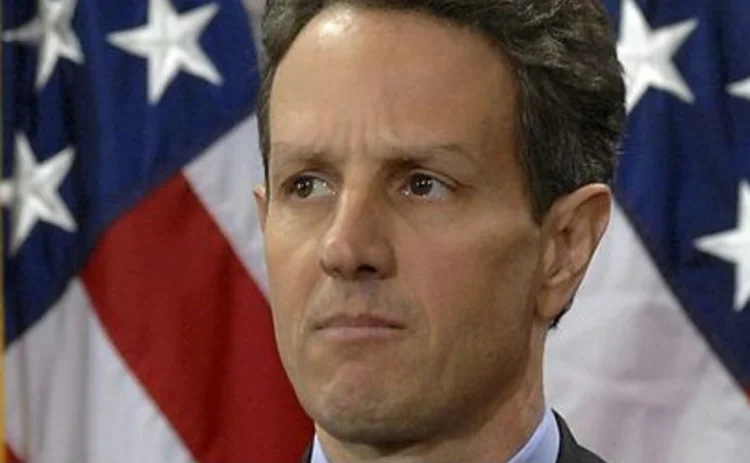
Fiscal retrenchment will lead to a current account surplus in Europe, contributing to severe imbalances in the global economy, economists have said.
The US, the UK and other European countries have run large budget deficits over the past decade, spending too much and saving too little, while net exporters – Japan, Germany and China among them – have accumulated current account surpluses through high savings rates and low consumption.
At a G-20 conference held in Busan, Korea on June 4-5, US Treasury secretary Tim Geithner called for surplus countries to stimulate their domestic economies in order to rectify the imbalances. “The ongoing shift toward higher saving in the United States needs to be complemented by stronger domestic demand growth in Japan and in the European surplus countries, and by sustained growth in private demand,” Geithner said.
But European policymakers have focused on cutting deficits rather than stimulating growth, and that may perpetuate the asymmetry in the global economy. According to Jacob Kirkegaard, research fellow at the Peterson Institute for International Economics in Washington DC, austerity packages in Europe are likely to reduce domestic demand in surplus countries even further. This could increase reliance on US consumption and perpetuate the world’s economic imbalances.
“The fiscal consolidation that we’re seeing in Europe and elsewhere will push up the Eurozone current account surplus and cause a relative loss in domestic demand, because all this is going on at the same time as significant deleveraging in the private sector. The result is that you’re left, once again, with the US as the consumer of last resort,” Kirkegaard says.
Raphael Gallardo, head of macroeconomic research at Axa Investment Managers in Paris, shares Kirkegaard’s view.
“We’re back to the world as it was at the beginning of the last decade; we haven’t learned anything,” he says. “We’re seeing global imbalances ballooning again, and no-one one wants to change their strategy. Germany is belt-tightening and exporting like crazy; China is exporting like crazy and maintaining a devalued currency; the US is continuing to spend and its savings rate is falling.”
Gallardo says the situation could lead to what he calls a “global bond trap”, as surplus savings are channelled into sovereign bonds, leading to excess liquidity in the government debt markets.
“In this new cycle, nothing has changed on the trade balance side, but on the capital side, the European banks aren’t accepting risk on their balance sheets so that they can channel savings to the private sector, as was the case previously. So everything will be managed by central banks in Asia and the Middle East. All these surplus savings will end up on the government market. China and the emerging markets will be parking their money in government bonds – Treasuries, Bunds – and that will completely flatten the government yield curve,” Gallardo adds.
Despite the prospect of depressed yields, Gallardo doesn’t envisage investors shifting allocations to corporate bonds in search of higher returns, because without any private sector investment there will be a lack of liquidity in credit, hence the phrase “bond trap”.
“Will bond investors be enticed to jump to the credit market or the equity market? I don’t think that will happen. That’s why I coined the expression “global bond trap”, because all the liquidity is parked in unproductive assets, and there won’t be any spending by the private sector, nor any reallocation towards more risk-taking by private investors.”
Data from the US Treasury International Capital System would seem to support Gallardo’s view: net capital inflows into the US are now mostly going into Treasuries rather than corporate bonds or equities. In April 2010, foreign purchases of long-term US Treasury bonds totalled $76.4 billion, compared with only $20.2 billion worth of combined corporate bond and equity purchases.
Only users who have a paid subscription or are part of a corporate subscription are able to print or copy content.
To access these options, along with all other subscription benefits, please contact info@risk.net or view our subscription options here: http://subscriptions.risk.net/subscribe
You are currently unable to print this content. Please contact info@risk.net to find out more.
You are currently unable to copy this content. Please contact info@risk.net to find out more.
Copyright Infopro Digital Limited. All rights reserved.
As outlined in our terms and conditions, https://www.infopro-digital.com/terms-and-conditions/subscriptions/ (point 2.4), printing is limited to a single copy.
If you would like to purchase additional rights please email info@risk.net
Copyright Infopro Digital Limited. All rights reserved.
You may share this content using our article tools. As outlined in our terms and conditions, https://www.infopro-digital.com/terms-and-conditions/subscriptions/ (clause 2.4), an Authorised User may only make one copy of the materials for their own personal use. You must also comply with the restrictions in clause 2.5.
If you would like to purchase additional rights please email info@risk.net
More on Economics
Global investment outlook: 2026 and beyond
Broadening, steepening and weakening: Franklin Templeton’s top investment ideas for 2026 and beyond

Webinar – Nowcasting the US economy
Join CME Group Chief Economist, Blu Putnam, as he shares insights using alternative data and nowcasting to monitor developments in the US economy.


Fed Funds Futures in a Post-ZIRP World
As the FOMC returns to more active management of its key target rate, Federal Funds futures have experienced dramatic growth.


Challenging economic pessimism: an optimistic note
A contrarian, upbeat view of the long-term economic outlook

Economists, like hedge fund traders, need open minds
Economists, risk managers and traders must learn the lessons of crisis, says Kaminski

Fed wrong not to start QE tapering, says UBS economist
The surprise decision by the Federal Reserve last month not to scale back its quantitative easing programme will create more volatility, says economist
