FCA: ‘We can be Libor fallback trigger’
Amid fears of hedging mayhem, Schooling Latter says FCA verdict could be trigger for smoother rates switch
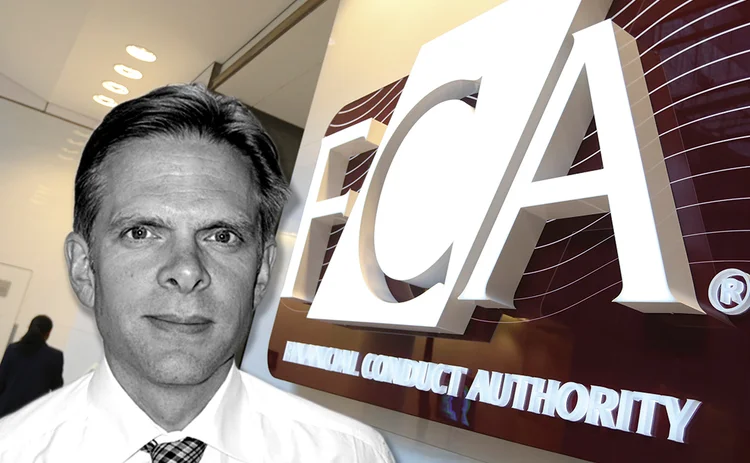

The UK markets regulator today outlined the role it would play in the last days of Libor, in a speech that could help a shared form of legal protection emerge – and potentially avert hedging chaos.
Edwin Schooling Latter, director of markets and wholesale policy at the Financial Conduct Authority, said the FCA will determine whether the benchmark is still representative of underlying funding markets whenever a contributing bank exits – as they will be free to do from the end of 2021. A negative verdict would be announced by the regulator and could be the trigger for so-called fallback clauses in bonds, loans, swaps and other products, in which Libor is replaced by a suitable alternative, rather than using the unsuitable rates baked into existing contracts.
“The FCA is mindful that contracts could … choose to include a trigger based on such an announcement. We are also clear on the consequent responsibilities we would have to ensure that any such announcement is communicated to the whole market in an appropriate manner with appropriate clarity,” he said.
Currently, different rates products are on track to use different fallback language, with some switching when Libor stops being published and others switching in the days or weeks beforehand. This could, for example, result in bonds decoupling from their hedging swaps, a scenario the industry is keen to avoid.
Members of the Financial Stability Board’s Official Sector Steering Group – the regulatory voice on efforts to replace Libor with new risk-free rates (RFRs) – have also backed the idea that rates products should use the benchmark’s representativeness as a common trigger.
“The OSSG at the end of last year heard very strong calls from chairs of some of the national working groups leading work on transition from Libor to new RFRs that we should aim for a common representativeness trigger across all these contract types. The OSSG agreed this had merits, where relevant regulations provide a foundation for such a trigger,” said Schooling Latter, who was speaking at the International Swaps and Derivatives Association’s annual legal conference in London.
The speech appeared to be an attempt to reassure market participants that they could use the FCA announcements as a shared fallback trigger across products and currencies, although it stopped short of urging such a step. Throughout the push for a Libor replacement, regulators have sought to leave such decisions in the industry’s hands.
Go your own way
In December, Isda released the results of an industry consultation on the design of fallbacks for derivatives that reference Australian, UK, Japanese and Swiss interest rates. Separately, the US industry working group – the Alternative Reference Rates Committee (ARRC) – has consulted on fallback language for floating rate notes and syndicated loans, and is asking for feedback on the same for securitised products and bilateral business loans.
The Bank of England-convened working group on sterling risk-free rates is planning to conduct its own consultation for cash products, while the euro risk-free rates working group is consulting on one-size-fits-all fallback language for Euribor-linked contracts, covering swaps and bonds.
Apart from the Isda consultation, the ARRC consultations are the furthest advanced. While both the Isda and ARRC consultations include obvious triggers such as the cessation of Libor, the latter also includes so-called pre-cessation triggers, one of which is activated on “a shift in the regulatory judgement of the quality of Libor that would likely have a significant negative impact on its liquidity and usefulness to market participants”.
The December 5 meeting of the ARRC heard feedback from respondents to the floating-rate note and syndicated loan consultation. According to the minutes, the group was told that “while respondents acknowledged the importance of cohesion between fallbacks in cash products and derivatives, a large majority believed that the inclusion of pre-cessation triggers … was warranted even if Isda did not adopt them.”
Most respondents wanted to include all three mooted pre-cessation triggers, “with some particular preference for including a trigger in the event that the regulator of Libor judged the rate to be non-representative.”
Isda has said swaps users are free to include these pre-cessation triggers in their derivatives contracts to align with the instruments they’re hedging.
In his speech, the FCA’s Schooling Latter said including a representativeness trigger across all products is key, given this would be the first major sign of a benchmark’s imminent death.
He pointed out that if a bank departs a panel of a rate classed as critical under the EU Benchmarks Regulation, the administrator and relevant regulator – in this case the FCA, which oversees the administrator of the Libor family of benchmarks in London – has to determine whether the benchmark is still capable of measuring the underlying market and economic reality.
If the relevant rate was found to be unrepresentative by the FCA or the Libor administrator, Ice Benchmark Administration (IBA), “market participants would then need to consider the many potential negative ramifications of using a rate when its regulator had found it not to be reliably representative of the underlying market,” he said.
“It seems sensible, then, to consider this scenario when choosing the design of fallback triggers,” he added.
Zombie Libor
If departures from the panels are gradual, Schooling Latter said the regulator may be able to indicate that while the representativeness test has not been failed, the danger of a failure was rising. The FCA won’t set a minimum number of panel banks, though, as the decision will depend on the identity of the remaining banks and their activity in the underlying markets.
Schooling Latter noted any difference in fallback triggers might be less impactful if there was a short period of time between the determination that a rate was no longer representative and the cessation of the benchmark.
This would mean the contracts would transition at roughly the same levels via the fallback mechanisms. In the derivatives markets, these are designed to move a contract referencing Libor onto a rate consisting of a compounded version of the approved RFR for that currency, such as the secured overnight financing rate in the US dollar markets. A spread is applied on top to take into account the credit risk embedded in Libor that is absent in the overnight-based RFRs.
The spread is taken from a historical view of the Libor/RFR basis market. The lookback period has yet to be determined, with five or 10 years suggested in the Isda fallbacks consultation. This means a gap of a few days between a representativeness decision and cessation is likely to have little impact on the spread.
“But that short period could be important,” he warned, noting that IBA’s Libor reduced submissions policy suggests the last available Libor rate could be published for some days before publication of the rate eventually ceases.
“If this were the case, reliance only on cessation triggers would subject derivatives seeking to hedge exposure to floating rates to an uncertain period of fixed-rate payments. A representativeness trigger would avoid this because contracts would change reference rate before any period of Libor publication based on a fixed rate,” said Schooling Latter.
This fixed period could skew the basis used for the fallback spread away from being solely market based, he added.
Only users who have a paid subscription or are part of a corporate subscription are able to print or copy content.
To access these options, along with all other subscription benefits, please contact info@risk.net or view our subscription options here: http://subscriptions.risk.net/subscribe
You are currently unable to print this content. Please contact info@risk.net to find out more.
You are currently unable to copy this content. Please contact info@risk.net to find out more.
Copyright Infopro Digital Limited. All rights reserved.
As outlined in our terms and conditions, https://www.infopro-digital.com/terms-and-conditions/subscriptions/ (point 2.4), printing is limited to a single copy.
If you would like to purchase additional rights please email info@risk.net
Copyright Infopro Digital Limited. All rights reserved.
You may share this content using our article tools. As outlined in our terms and conditions, https://www.infopro-digital.com/terms-and-conditions/subscriptions/ (clause 2.4), an Authorised User may only make one copy of the materials for their own personal use. You must also comply with the restrictions in clause 2.5.
If you would like to purchase additional rights please email info@risk.net
More on Markets
ISITC’s Paul Fullam on the ‘anxiety’ over T+1 in Europe
Trade processing chair blames budget constraints, testing and unease over operational risk ahead of settlement move

Integration strengthens e-trading in persistently volatile markets
Survey reveals that traders are grappling with daily volatility, while technology outranks liquidity as the top market structure concern

How Optimal aims to shake up US retail options trading
New wholesaler has assembled a team of market-makers to compete with Citadel, IMC/Dash and Jane Street

Repo stress drove 2025 SOFR-to-fed funds swap pivot
SOFR OIS volumes slipped to almost half of fed funds activity during September repo spikes

Renminbi options volumes plummet as vol grinds lower
USD/CNH volumes fell 84% in 2025 as PBoC currency management took hold

Esma to issue guidance on active account reporting
Briefing and Q&A aims to clarify how firms should report data ahead of RTS adoption

Forex looks to flip the (stable)coin
Friction-free foreign exchange is the prize offered by stablecoins such as Tether and USDC. But the prize remains elusive

Market warns BoE against blanket mandatory gilt repo clearing
Official says proposals receiving push-back on one-size-fits-all approach and limited netting benefits