

Metro Bank aspires to IRB for credit risk
CRO Aileen Gillan discusses UK bank’s approach to culture, conduct and credit risk under Basel II

Metro Bank delivers a slightly different customer experience compared with the average bank branch visited by most UK consumers. That includes quirky offers of free dog biscuits, lollipops, coin counting machines and mascot-accompanied interactive games for children, along with a spacious, open and colourful layout that resembles something closer to a fast food outlet than a bank.
That's no coincidence. Metro Bank's founder is Vernon Hill, a flamboyant US entrepreneur and former fast-food franchisee who specialises in applying mass-market retail techniques to banking. Hill has already enjoyed some success with this approach: in the 1970s, he founded Commerce Bank, a US lender that became one of the country's largest banks, before it was sold to Canada's Toronto-Dominion Bank in 2009. Now known as TD Bank, Hill's old business shares many similarities with Metro Bank, which he continues to serve as chairman.
As with its US counterpart, the bank's ethos is about keeping things simple and customer-friendly. Unusually for the UK, it boasts Sunday opening hours and drive-through cash machines. To some extent, that customer-friendly approach also carries over into risk management, says Aileen Gillan, its London-based chief risk officer (CRO).
"Our goal is to become the Apple of banking," she says. "Customers that have a great experience with Apple products often go on to become real proponents of Apple as a company. That's something that we want to reflect in banking by delivering outstanding service for customers."
Although the business is not yet earning a profit, it has expanded quickly, going from one branch in 2010 to 41 by May this year. In March, Metro Bank raised £400 million ($585 million) through listing on the London Stock Exchange. In April, it reported first-quarter results that included a year-on-year increase in lending of 125%, to £4.1 billion, and a 75% rise in deposits, to £5.9 billion.
One of Gillan's priorities is making sure this growth occurs in a safe manner. "There are a number of risks associated with growth," she says. "As CRO, my job is to make sure that we build the bank safely and sustainably."
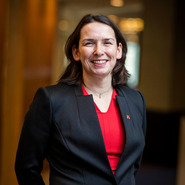
One of the challenges with being a relatively new firm is that developing [risk] models is dependent on having loss data
Aileen Gillan, Metro Bank
The situation is a contrast with many more established banks, which have been busy quitting business lines, dealing with problem assets and fighting off irate customers and regulators. Having had a taste of this earlier in her career, Gillan is pleased to be able to focus on something else.
"One of the challenges in other banks is having to deal with legacy issues, and there are a lot of distractions which come with that," she says. "Mis-selling is the perfect example of a legacy issue that required a lot of remediation activity from the big banks that was hugely time-consuming. We, on the other hand, can spend all of our time looking forward."
Model student
While there are many advantages to being small, there are drawbacks too. One of those is the current regulatory capital framework for credit risk laid down by the Basel Committee on Banking Supervision.
In broad terms, the rules allow banks to calculate their credit risk-weighted assets using either a simpler standardised approach or a more sophisticated internal ratings-based approach (IRB). Metro Bank currently uses the standardised approach, but Gillan says it is eager to move towards the IRB.
The move could result in significant capital benefits: Gillan cites the example of residential mortgages, for which she says IRB banks would typically use a risk weight of anything between 8% and 20%, compared with a risk weight of 35% under the standardised approach.
Gaining approval to use the IRB is a difficult process, which confers "a big advantage" on larger banks, she argues. For instance, firms must prove to regulators that they have the credit risk infrastructure to support an advanced approach, including robust models and good-quality data. "One of the challenges with being a relatively new firm is that developing those models is dependent on having loss data," she says. "Of course, when you've only been in business for a very short amount of time, as we have, you don't have any meaningful historical data."
Yet despite the significant challenges it faces, Metro Bank is ploughing ahead with the development of its IRB models. "The benefit for us is clear, but you need to build sophisticated models, so a lot of our focus is on that – taking what we have and moving to the next level," says Gillan.
This theme is also reflected in Metro Bank's approach to supervisory stress tests. Metro Bank isn't one of the seven largest UK lenders subject to the Bank of England's annual stress tests, and neither is it one of the 51 banks stress-tested by the European Banking Authority. But regardless of this, Gillan says the bank will often copy supervisors' stress scenarios and use them for its own internal stress-testing.
"[Regulators] don't always ask the smaller firms to run those tests, but we see it as good practice to test them on our own portfolios under the parameters they're asking other firms to use, as they allow us to test the hypotheses we have around the underlying quality of our lending portfolio."
We have a conservative approach to credit risk – so our commercial credit is manually underwritten by experienced credit partners
Aileen Gillan, Metro Bank
Before becoming a risk manager, Gillan spent five years working as a barrister in Northern Ireland. After receiving an MBA from the UK's Cranfield School of Management, she joined PricewaterhouseCoopers in 1998 as a risk management consultant. She later held roles related to risk management at law firm DLA Piper, Royal Bank of Scotland and UK consumer insurance firm BGL Group.
Prior to Metro Bank, her most significant risk management experience was at Lloyds Banking Group – a firm that was hit hard by the global financial crisis. Having joined Lloyds' wholesale banking risk management team in 2009, she was made CRO of the bank's asset finance business in 2011. "It was a fascinating time and a very challenging time," she remembers. "Not just in terms of dealing with the credit issues that arose as a result of the crisis, but also the emergence of conduct risk and conduct issues that so many firms are now proactively managing."
 By 2013, she was looking for a change, and took the opportunity to join Metro Bank – becoming the bank's second CRO since its initial launch in 2010. "I thought: how often do you get the opportunity to build a bank, and, as a CRO, be at the heart of that?" she says.
Metro Bank makes use of the popular 'three lines of defence' model, in which responsibility for risk management is shared between frontline staff, risk management, and internal and external audit functions. As CRO, she reports directly to London-based chief executive Craig Donaldson and has responsibility for enterprise-wide risk management across the business. That includes a team of 60 staff working in areas such as operational risk, compliance, conduct risk, treasury risk management and anti-money laundering.
"There are a number of frontline colleagues who have risk-based roles, but the role of the second line is to ensure we have the correct framework in place in order to oversee that, whilst providing advice and support to colleagues," she explains.
The bank has a fondness for euphemisms: its branches are 'stores'; its customers are known as 'fans'; and similarly, many of its client-facing staff have been designated as 'risk champions'. These risk champions are frontline staff that have been appointed by the CRO and form an important part of the bank's first line of defence, liaising with business heads to maintain appropriate risk management.
"Our 'risk champions' ensure that colleagues in the front line have the right support and processes in place to manage the key risks that we in the second line identify," says Gillan.
Vision express
Culture is an important part of Metro Bank's risk management approach. Gillan says the values that Metro Bank instils in its employees through its two-day training process, known as Visions, are highly relevant. For instance, employees are taught the mantra "ask when not sure" – encouraging them to raise doubts or concerns quickly with more experienced colleagues. Employees are also encouraged to focus on the customer, potentially helping to avoid instances of mis-selling or other types of conduct risk.
"Every colleague who joins Metro Bank joins the Visions training," says Gillan. "It helps new colleagues understand how living our values creates fans rather than customers. As part of that induction, I speak to every new group of colleagues and help them understand how risk management sits at the heart of that process too."
In terms of credit risk, Metro Bank's risk appetite is very conservative, says Gillan. "We describe ourselves very much as old-fashioned bankers," she says. "Our model is based on relationship management when it comes to lending. We have a conservative approach to credit risk – so our commercial credit is manually underwritten by experienced credit partners, and that's reflected in the quality of our portfolio."
The bank's product offering is uncomplicated, ranging from current accounts and mortgages for retail customers to asset financing for small and medium-sized enterprises. The simplicity of Metro Bank's business makes the job of risk management easier, says Gillan, particularly when it comes to issues such as conduct risk. "From a conduct risk perspective, we're inherently lower-risk because we're not a product-led bank," she says. "We have one current account, one credit card, a simple range of mortgage products and so on. That's a deliberate choice on our part to keep it simple."
Other aspects of the bank's strategy also help avoid the potential for lapses in conduct; one example cited by Gillan is the spelling out of product features in plain and straightforward terms. "Our offers are clear and transparent, even right down to their terms and conditions, which forms a key part of our approach."
Biography: Aileen Gillan
1992–1997 Barrister, Inn of Court of Northern Ireland
1998–2001 Risk management consultant, PricewaterhouseCoopers
2009–2013 Wholesale banking risk management, Lloyds Banking Group
2011–2013 CRO, asset finance, Lloyds Banking Group
2013–present Metro Bank
Only users who have a paid subscription or are part of a corporate subscription are able to print or copy content.
To access these options, along with all other subscription benefits, please contact info@risk.net or view our subscription options here: http://subscriptions.risk.net/subscribe
You are currently unable to print this content. Please contact info@risk.net to find out more.
You are currently unable to copy this content. Please contact info@risk.net to find out more.
Copyright Infopro Digital Limited. All rights reserved.
As outlined in our terms and conditions, https://www.infopro-digital.com/terms-and-conditions/subscriptions/ (point 2.4), printing is limited to a single copy.
If you would like to purchase additional rights please email info@risk.net
Copyright Infopro Digital Limited. All rights reserved.
You may share this content using our article tools. As outlined in our terms and conditions, https://www.infopro-digital.com/terms-and-conditions/subscriptions/ (clause 2.4), an Authorised User may only make one copy of the materials for their own personal use. You must also comply with the restrictions in clause 2.5.
If you would like to purchase additional rights please email info@risk.net
More on Risk management
US Treasuries clearing: a new era
What will the SEC’s clearing mandate mean for your firm? Explore the latest updates and analysis around clearing models, collateral requirements, risk tools and market structure

Seven developments shaping US Treasury clearing
As the SEC’s US Treasury clearing mandate approaches, FICC is rolling out new access models, protections and risk tools to help market participants prepare for a broader move into central clearing

Fireside chat: Advancing FX clearing for safer settlement
Developments in FX clearing are supporting the creation of a safer, more scalable settlement infrastructure

FHLB Cincinnati explores AI to spot failing banks
Agentic model detects anomalies, monitors sentiment and drafts credit reports for analyst review

Iran strikes a stress test for CCP margin models
CME’s Span2 and Ice’s IRM2 are performing as advertised. The next few days could test their mettle

Most banks run physical climate scenarios beyond 2050
Risk Benchmarking data finds majority rely on geospatial asset mapping, while a third use third-party catastrophe models

Big banks love their climate vendors; small banks, not so much
Risk Benchmarking: Lenders with blue-chip loan books more likely to favour climate tools, research finds

Mob rule: populism’s rise pits banks against the people
Trump and fellow mavericks are reshaping politics, leaving banks scrambling to adjust to new and unpredictable risks
