Podcast: Hans Buehler on deep hedging and the advantages of data-driven approaches
Quant says a new machine learning technique could change the way banks hedge derivatives
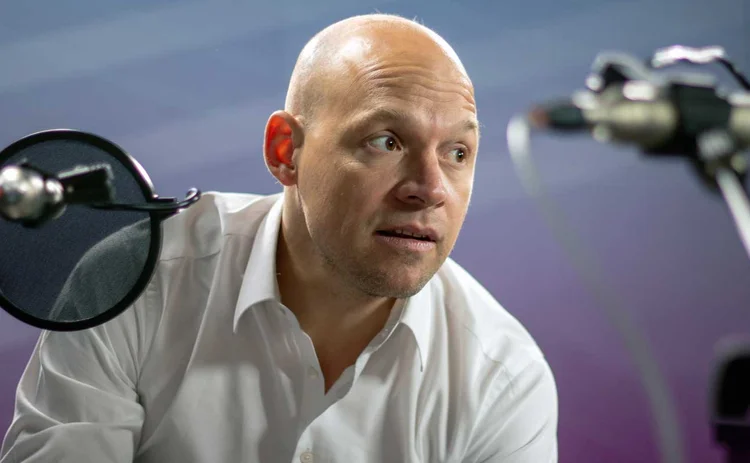
Hans Buehler, global head of equities analytics, automation and optimisation at JP Morgan, visited our London offices to record a podcast on a recently published paper he co-authored on a new technique called deep hedging.
The quant argued this new machine learning technique can hedge derivatives without the need to use classical models such as Black-Scholes. Typically, banks use risk sensitivities known as Greeks derived from classical models to hedge their options books, but these methods are limited in their ability to factor in transaction costs and additional market information. With deep hedging, machines can learn from large amounts of historical data to make more precise hedging decisions, said Buehler.
“Every trader who uses all these classical models will tell you there are some overrides, [such as] delta skew or barrier shifts… none of these are systematic usually in the strict mathematical sense, so it keeps requiring human input to maintain those [overrides],” said Buehler. “Then the machine learning techniques came up which made it possible to do much heavier, much more precise calculations.”
Buehler argued the approach also aligns with the way traders actually think about hedging, as the objective is mainly to reduce hedging error, or the difference between the hedged item and the hedge.
“It fundamentally does what people actually do when they trade. In reality, they [ask], ‘What do I need to do in order to minimise my hedging error in the sense of P&L uncertainty?’ rather than saying, ‘How much vega do I have?’. It is very data driven,” Buehler added.
Another advantage is that the technique allows for more automation of hedging, as machines can run in parallel to identify appropriate hedges. This can make the process faster.
“If I wanted to run a lot of books of options in parallel, it is very difficult for humans to observe the vega exposures on a lot of single stocks in parallel because each book is very specific,” said Buehler.
The technique is currently being applied to index options books, although this can be expanded to more liquid vanilla products, Buehler said. One caveat is that less liquid over-the-counter products may be hard to apply this technique to, as data is sparse for these instruments.
Index
0:00 Introduction
1:20 What is deep hedging?
4:32 Applications of deep hedging
6:12 Advantages of not using Greeks
8:08 Sparse datasets
9:10 Asset classes applicable
10:23 Operational changes from adoption of the technique
11:42 Benefits to exotics and illiquid products
12:47 Caveats to deep hedging
13:35 The black box problem
14:27 Will banks adopt this on a larger scale?
To hear the full interview, listen in the player above, or download. Future podcasts in our Quantcast series will be uploaded to Risk.net. You can also visit the main page here to access all tracks, or go to the iTunes store or Google Podcasts to listen and subscribe.
Only users who have a paid subscription or are part of a corporate subscription are able to print or copy content.
To access these options, along with all other subscription benefits, please contact info@risk.net or view our subscription options here: http://subscriptions.risk.net/subscribe
You are currently unable to print this content. Please contact info@risk.net to find out more.
You are currently unable to copy this content. Please contact info@risk.net to find out more.
Copyright Infopro Digital Limited. All rights reserved.
As outlined in our terms and conditions, https://www.infopro-digital.com/terms-and-conditions/subscriptions/ (point 2.4), printing is limited to a single copy.
If you would like to purchase additional rights please email info@risk.net
Copyright Infopro Digital Limited. All rights reserved.
You may share this content using our article tools. As outlined in our terms and conditions, https://www.infopro-digital.com/terms-and-conditions/subscriptions/ (clause 2.4), an Authorised User may only make one copy of the materials for their own personal use. You must also comply with the restrictions in clause 2.5.
If you would like to purchase additional rights please email info@risk.net
More on Markets
Broker quoting gap keeps Eurex-LCH basis alive
Lack of differentiated prices helps retain CCP basis

QIS futures debut – but only simple ones for now
Goldman and Societe Generale kick-start Eurex market with equity baskets

Hedge funds trim US swap spreads on tariff decision
Investors cut back asset swap positions as Supreme Court ruling reignites deficit concerns

Opinions split on EU bond balance sheet squeeze
Some say QT and issuance wave will hamper intermediation; others say dealers nimble enough to respond

Eurex looks to shine ‘more light’ on off-book liquidity
Block order book initiative to aid price discovery slated for later this year

CME outage sparks FX soul search
How November’s halt exposed fragile wiring of new futures-led market structure

CME outage exposed FX market’s futures dependency, says SNB
Study finds EUR/USD spreads widened eightfold as non-bank PTFs blew out by nearly 30 times in November halt

CME rankles market data users with licensing changes
Exchange began charging for historically free end-of-day data in 2025